
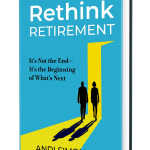
 Rethink Retirement™
 Women Mean Business
 Rethink
 On the Brink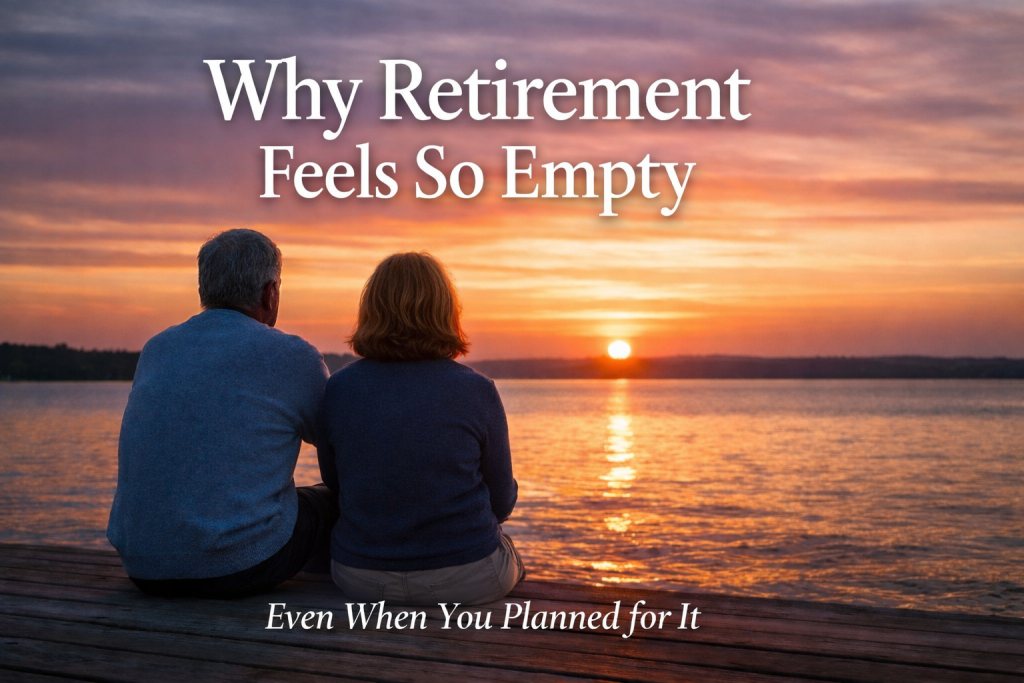
“I thought I’d love retirement… but something feels missing.”
I hear this more often than you might expect.
After decades of structure, responsibility, and impact, people step into retirement expecting freedom—and instead find themselves feeling unanchored. Not because they failed to plan. But because they planned for the wrong thing.
Retirement Is Not What We Think It Is
For years, retirement has been framed as a financial milestone:
Save enough. Invest wisely. Exit comfortably.
But what happens when the spreadsheets are right—and the experience is wrong?
As a corporate anthropologist, I study how people actually experience change. And what we are observing is clear:
Retirement is not simply a financial transition.
It is a human and cultural one.
And most people are unprepared for that shift.
The Hidden Gap: What No One Prepares You For
When people leave work, they don’t just leave a job.
They lose:
- A sense of identity
- A daily structure
- A source of purpose
- A built-in community
These are not small things. They are the architecture of a meaningful life.
And when they disappear all at once, the result is often surprising:
- A sense of emptiness
- Loss of direction
- Quiet loneliness
- Even a feeling of invisibility
Not because something is wrong—but because something important is missing.
The “Honeymoon Phase” Myth
Many people experience what I call the “honeymoon phase” of retirement.
At first, it feels wonderful:
No alarm clock. No deadlines. No pressure.
But after a few months, something begins to shift.
The novelty wears off.
The days begin to blur.
And the question quietly emerges:
“Now what?”
This is the moment most people were never prepared for.
Just listen to M.L. Mackin’s Podcast where she shares her own journey from joy to depression, and out again to purpose and meaning.
Why Freedom Alone Isn’t Enough
We tend to think of retirement as freedom from work.
But what people actually need is freedom with meaning.
Without structure, days lose shape.
Without purpose, time loses value.
Without connection, life can feel smaller instead of larger.
This is why so many retirees find themselves:
- Looking for reasons to get out of the house
- Reaching back to former colleagues
- Wondering how to feel useful again
Not because they want their old jobs back—
but because they want their sense of mattering back.
What Anthropology Helps Us See
Anthropology teaches us to look at transitions differently.
In many cultures, major life changes are marked by rituals, guidance, and community support. There is recognition that moving from one stage of life to another is not automatic—it requires redefinition.
Retirement, however, is often treated as a simple exit.
No roadmap.
No shared language.
No real preparation for what comes next.
Which is why so many people find themselves in what anthropologists call a liminal space—
“betwixt and between” who they were and who they are becoming.
A New Way to Think About Retirement
If retirement feels empty, it’s not a failure.
It’s a signal.
A signal that this stage of life needs to be designed, not drifted into.
From our research and work with individuals and organizations, four elements consistently shape a fulfilling next chapter:
- Identity
Who are you becoming now—beyond your title?
- Structure
How will you design your days, so they have rhythm and intention?
- Purpose
Where do you still want to contribute, create, or matter?
- Community
Who are your people in this next stage of life?
These are not “nice-to-haves.”
They are the foundation of a meaningful life after work.
The Opportunity Ahead
Here’s the part that often gets missed:
Retirement is not the end of something.
It is the beginning of a new stage—one that can be deeply fulfilling, if approached intentionally.
But it requires a shift:
From planning an exit…
to designing what comes next.
Closing Reflection
If you—or someone you care about—is approaching retirement or already there, consider this:
What if the question is not,
“Am I ready to retire?”
But instead,
“Am I ready to design what comes next?”
Because retirement isn’t just a transition to manage.
It’s a life stage to design.
If you’d like to go deeper, I’ve captured these insights, stories, and practical frameworks in my new book, Rethink Retirement: It’s Not the End—It’s the Beginning of What’s Next.
You can explore it here.
Or, if you prefer a more interactive experience, join us for an upcoming webinar or masterclass
- Join our upcoming complimentary webinars: Rethinking Retirement: Real Stories from the Edge of What’s Next
- Explore the Rethink Retirement Masterclass for practical tools and frameworks
- Or bring this conversation into your organization as part of your leadership and people strategy